Posts

Return to the Source

Image
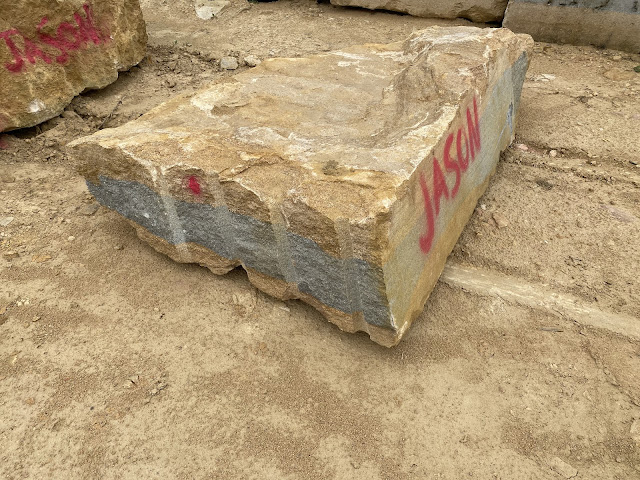
Back at the quarry in Ancaster yesterday for further searching of suitable stone for the three sculptures for the project. When I was last here a few weeks ago there was only a few suitable pieces that I provisionally marked as suitable. Since then the quarry has been organising and going over their stock which has brought a few more slabs to my attention. It’s good to come back with fresh eyes, a spray water bottle and a tape measure. By wetting and spraying the edges of the blocks it helps high light any faults or venting which can normally be hidden by the mud! It’s a real ‘needle in the haystack’ affair and you have to stop yourself from getting carried away with the task at hand.

Artist Impression

Image
 

Stone Shopping!

Image
Ancaster Weatherbed Limestone Quarry, Grantham, UK. Looking for the right stone for the job…..

Redrow News

Image
 

Making the model - Developing the concept

Image
  Fragments; vessels; dwellings; Family group; conversations; framing; windows; form; woodland, shelter……..

Back to school - Carving out a future

Image
Learning and sharing new skills with a new generation of artists at Langley Park Primary Academy. Stone carving - relief carving and the transfer of 2D drawings into 3D sculptures. Working with the concept of pottery fragments from the dig at Monchelsea place into modern day equivalents - pot plants - house plants and modern day use of terracotta pots.

History of a Sculpture

Image
Concepts, designs and editing! Where the ideas begin and the process of linking the history of the site to the function and use of the space with the people who will use it. I was drawn to the woodland in the distance, the sence of habitation for both wildlife and people. The domesticated fragments of pottery (both historically and modern day use) notions of 'nesting' 'dwelling' 'windows', 'trenches', 'family grouping' and a place / space which evokes 'calm, security and play'.  The Monchelsea Place site has had an archaeological dig take place prior to the development of the land for family housing.  The archaeological evaluation undertaken  by Swale & Thames Survey Company (SWAT Archaeology) has been successful in identifying the presence of ditches, pits, postholes and a possible ‘trample layer’ associated with the Iron Age and Roman-British periods. Archaeological features were recorded in 14 trenches out of the 48 excavated. Find...